Shortfire Press
Has Closed
Short Fire Press was a digital-only publisher specializing in short stories from new and established authors. For a number of years this was its website.
Content is from the site's 2014 archived pages providing a glimpse of what this publisher offered its authors and readership.
ABOUT
We are a digital-only publisher specialising in short stories from emerging and established writers.
Everyone is busy nowadays. But there's always time for a short story. Here you'll find stories, short and sweet, which you can buy one by one. That means you can discover new writers and new stories and read them in the time it takes you to get to work, wait for a friend in a bar, or in any spare moment you have to yourself.
We believe both that writers should be paid properly and readers should not have to spend a fortune to find new writers, and our prices reflect that. Short stories will be priced at 99p each to provide the best of both worlds: a competitive price for the reader and a fair return for the author. Shortfire Press works on a no-advance, profit-share basis.
Shortfire Press is run by editor Clare Hey.
UPDATE: September 19, 2016 Clare Hey, editorial director at Simon & Schuster UK, is joining Orion Fiction as publishing director.
"I have loved my time at Simon & Schuster and will miss the authors and the team enormously, but I couldn't resist the opportunity to join Orion at such an exciting time. I have long admired David Shelley, Katie Espiner and Harriet for their energy, their vision and their drive to bring great books to a wide audience, and I am looking forward to joining them and helping shape the future of Orion Fiction."
UPDATE: Orion's Clare Hey returns to S&S UK
Published August 5, 2019 by Heloise Wood
Orion’s Clare Hey will be returning to Simon & Schuster UK to take up the role of publishing director of fiction across adult publishing.
She will report to adult publishing m.d. Suzanne Baboneau at S&S UK, taking up her position on 4th November.
Hey is currently publishing director of Orion Fiction, and is responsible for running the women’s fiction, historical fiction and reading group fiction parts of the list. Her first major acquisition for Orion was The Lido, Libby Page’s bestselling debut, and she has also worked with Erica James, Joanne Harris, Cathy Kelly and Fanny Blake.
She joined Hachette in January 2017, after five years as editorial director of fiction S&S UK.
“Hey brings to this new role her considerable editorial reputation coupled with a wealth of strategic publishing experience,” S&S UK said. “She has an author-centred approach and proven ability to launch debuts, build brand authors and publish the best across the breadth of fiction.”
Hey said: “I am delighted to be joining S&S again and working with Ian and Suzanne and their brilliant team and amazing authors. I will, of course, be sad to leave behind the wonderful team and authors at Orion but feel privileged to have been part of an exciting time in their history. I am really looking forward to getting started at S&S, and being part of its future growth.”
Baboneau said: “It is a complete delight to welcome Clare to Simon & Schuster UK once again. She joins the company at a time of growth and investment, and her overall publishing experience including, latterly, the invaluable time she spent at Orion, will pay great dividends. Clare will take the helm of a thriving department and a flourishing fiction list." She added: "There is much more to do and to have Clare on board, with her dynamism, her wonderful way with authors, and her keen ambition for our publishing, is key to us delivering even greater success.
~~~~~
AN ASIDE: When I was beginning my career as a writer, I became quickly aware of the many online digital only publishing sites. ShortFire Press was an interesting one. Founded by an editor, Clare Hey, it specialized in short stories. I had just started college, majoring in literature. At the time I wanted to be a writer of children's books. Life didn't exactly work out they way I had imagined when I was still in my late teens. I do write but it is not stories. Instead I am a web designer and write copy for a number of websites including an e commerce site that sells eyeglass frames and replacement lens. For instance, recently I wrote a 1000 word article on designer glasses and frames. The content was written to help the site rank in the organic search for the terms men and womens designer eyeglass frames. This type of writing is quite different from what I originally had wanted to do, but bills must be paid etc. However, in my spare time to do indulge in writing children's stories (for my own kids as well as nephews and nieces.) Perhaps one day I will choose to submit them to a children's book publisher. But for now, although my audience is small, they are appreciative and clamor for more stories about their favorite characters.
To cut a long story short – life as a short story publisher

Written by Clare Hey on April 15, 2011. Posted in Articles, How-To, Views.
A mighty impressive tale of starting out as an online publisher – Clare Hey, founder of Shortfire Press shares her experience… what do you think?
To cut a long story short – life as a short story publisher
Written by Clare Hey on April 15, 2011. Posted in Articles, How-To, Views.
A mighty impressive tale of starting out as an online publisher – Clare Hey, founder of Shortfire Press shares her experience… what do you think?
Pressing Go!
The first few months have been exciting. The moment I pressed the ‘Go’ button on the website, making it live, was terrifying – that sudden realisation that the site would be visible to everyone and the worry that no one would like it or, worse, no one would even visit it. But that worry was unfounded, thankfully. And when the first sales started coming in, all those months of hard work felt worth it – readers were buying the stories, and were telling me they like them too.
Connecting with Readers
Out of everything, I think it’s the moments of connection with people that has made the site feel special to me – from people writing nice things in the papers and in their blogs, to tweets from people saying how much they enjoyed the stories – connecting with readers in such a direct way has been one of the unexpected joys for me. And the support from the industry has been amazing – from the Bristol Short Story Prize to the Faber Academy to London Writers Club and agent and writers and other editors, people have been amazing.
Scary Moments
But it’s not all been plain sailing. There have been scary moments (like when I received a legal letter threatening to sue if we didn’t change our name – which we did, of course) and frustrating moments (like when my computer crashed right in the middle of updating the site and I lost loads of work). I’ve learnt that you have to give stuff away for free so there are now free samples of all our stories, as well as a completely free story from Marcel Theroux. I’ve also learnt that everything has to be super simple in terms of the digital world – and that’s something I’m always working on. And I’ve learnt that there are not enough hours in the day (my list of as-yet-unread submissions testifies to that and I started with such good intentions on always getting back to people within a fortnight).
The Future
But as we enter our fourth month of existence, the future looks exciting. I’m working on some exciting (top secret!) collaborations, and as the name spreads we reach more readers and I feel as though I get to spread a little more short story joy. Do come and check the site out – I’d love to hear what you think.
Friday, 5 August 2011
AN INTERVIEW WITH CLARE HEY OF SHORTFIRE PRESS -'Taking the story out of the collection...'
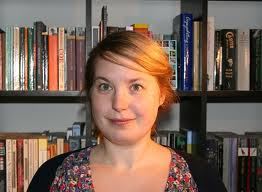
Shortfire Press is a digital-only publisher specialising in short stories from new & established authors. Its founder, owner, editor and general good egg is Clare Hey, who I met at ShortStoryVille in Bristol a few weeks back - and between us we cooked up an interview swap. So here is Clare - telling you about herself, about her press, about her other day job as freelance fiction editor working at some great publishing houses...she is quite a power-house! Shortfire has exclusive short stories by some stunning writers, among them Niven Govinden, Tiffany Murray, Salena Godden, Sarah Hilary, all carefully selected for your delectation. It ain't easy to join that list - your work has to really sparkle. But I asked Clare to give writers, especially those who may be new to submitting, a few tips...
Welcome to the blog, Clare. Firstly, could you tell us a bit about yourself?
I'm an editor by day and a bitter-drinking Yorkshire lass by night. I moved to London ten years ago to go to university and have been here ever since, working in publishing since I graduated. My first job was at HarperCollins, where I stayed for eight years, working my way up to Senior Editor, commissioning some great books. I left there eighteen months ago and have since been a freelance editor for lots of big publishers, and am currently working at Simon & Schuster as a fiction editor. Oh, and running Shortfire Press too!
Tell us about Shortfire!
We are an independent digital-only short story publishing house. We specialise in stories from both début and more established authors, and boast some amazing award-winning writers on the site. The thing we do differently is that each story is downloadable separately, so you can try just one story for just 99p. All our stories are exclusive to us and brand new - and we hope the site is a place for readers to discover the best writers around today.
What gave you the idea for Shortfire Press?
The idea came about as I've always been a fan of short stories and I suspected the advent of digital publishing would offer new opportunities for short stories. So, in a moment of inspiration whilst on holiday I decided to marry the two and to take the story out of the collection, if you like; to make stories available one by one for 99p. The mission is to bring the short story to everyone!
How did you select the very first story, and what was it?
I launched with three short stories: 'Topple' by Laura Dockrill, 'Summer in the City' by Nadifa Mohamed and 'It Snows they Say on the Sea' by Elizabeth Jenner. I asked Laura and Nadifa to write stories for me as I'd worked with them both before (I edited Laura's amazing short story collection Echoes, and I commissioned and edited Nadifa's Black Mamba Boy, which went on to be included in pretty much every shortlist going - which was nice!). Elizabeth's story came to me through a mutual friend, Ben Johncock, who said it was the best story he'd ever read. I hear this a lot and was sceptical, but he wasn't wrong. Elizabeth's story is now our bestselling story - and the fact it was the first piece of writing she's ever had published makes it even more special.
Tell us about the subs process - and your selection process.
What makes the short story so perfect for this - length of course, but what else?I'm looking for amazing writing, great plots, evocative settings, and a freshness of voice. I want our readers to be able to trust that every story they download from Shortfire will be a corker, so I am pretty picky in choosing which stories to go for. I'm happy to take on a writer who is not well known - I want to discover the writers of tomorrow as well as featuring the best writers of today. For more details about the ins and outs of submitting, visit the subs info on Shortfire's website.
I feel like short stories are undergoing a renaissance of a sort and digital publishing is part of that. They are ideal for reading when you have a set amount of time - a train journey, or a lunch break - and they are just great full stop! I don't really buy into this whole idea that people have less time so they want to read shorter works. But whatever brings people to Shortfire, I'm happy!
I love discovering work from new writers - if there is a new writer who is a bit scared of submitting to you, (and indeed anywhere good) what would you say to them?
I hope no one would be scared of submitting to us! I would say make sure your story is as perfect as you can get it. Then be bold! Yes, you'll get rejections, but hopefully along the way you'll get some useful feedback. But do your research. Make sure you read the submissions guidelines and that your story fits what the publisher is looking for. If they say they don't do SF, then don't submit SF - the editor isn't going to look at it and think, Well, this is not what we're looking for but it's so amazing I'm going to turn my publishing house upside down to accommodate it. And read some of the stuff the publisher does publish - it's the best way to find out what they are looking for. But, in the end just go for it!
What are you reading in your spare time?
One of the best things about my job is the free books so I always have a massive to-read pile. At the moment I'm reading Helen Oyeyemi's new collection of stories, Mr Fox - it's so original and impressive. I've got Seeing Stars by Simon Armitage for my hols (I've got a bit of a crush on him), as well as The Memory of Love by Aminatta Forna and The Lacuna by Barbara Kingsolver. That should keep me going for a while!
I loved Oyeyemi's Mr Fox. I devoured it in a train journey and a morning, and it's one of those books I can't wait to read again. There's so much in it...but back to you! Anything else you'd like to natter about!
I was once nervous about approaching a famous and rather aged writer, and was worried about what I'd talk to her about. Then someone told me that she liked to talk about the same things as the rest of us: cats, food and sex. So that's been my mantra ever since!
Love that! Do you write stories yourself?
Nope. And I hugely admire anyone who does.
Thanks Clare, for that glimpse into the world of Shortfire Press
~~~~~~~~~~~~~~~~~~~~~~~~~~~~~~
News just in!
Black Mamba Boy by Nadifa Mohamed, which I commissioned and edited at HarperCollins, has won the Betty Trask award.
It was also short listed for the Dylan Thomas Prize, the John Llewellyn Rhys Prize and the Guardian First Book Award.
Shortfire Press
I am the publisher of Shortfire Press, a digital-only short story publishing house.
Introduction
I am an editor with eight years of experience of editing fiction and non-fiction, and commissioning literary fiction, within the UK publishing industry.
I am creative and innovative with a keen eye for great books along with a good understanding of the market and what readers want.
I am available for both freelance, temporary and permanent work, structural editing, copy editing, proofreading, reading, reviewing, advice. Just ask!
SUBMISSIONS
We don't like rules, except perhaps to break them, but we have a few guidelines which you should read before submitting your story to us:
• All work must be your own, entirely original and not previously published
• We encourage submissions from writers across the globe but we only accept stories in English
• Word counts should be from 2,500 words to 15,000 but every one of those words must count - no flab, please
• We're looking for great literary/upmarket fiction which is plot-driven, has an original voice and is fresh and vibrant
• All submissions should be sent by email to submissions@shortfirepress.com and attached as a Word document. Please tell us a bit about yourself and your writing background too so we can get to know you
~~~~~~~~~~~~~~~~~~~~~~~~~~~~~~
INTERVIEWS
INTERVIEW: Stuart Evers
1. Why ten stories about smoking? Are you trying to make us start smoking again?! (We quit ages ago…)
No, but perhaps I am trying to make you think about the time when you did smoke. That’s kind of what I was going through. When I started writing the collection, I’d quit smoking for three years or so, but still missed it. I’d catch myself looking longingly at people huddled outside pubs and bars; gaze at the displays behind the kiosks in supermarkets. In some ways the book came out of that, also the idea of having a stricture, a kind of discipline appealed. I’m a huge admirer of Georges Perec and his ability to write convincing, beautiful stories while also setting himself limits: like writing without the letter e, or to a set pattern derived from chess moves. Cigarettes seemed like the most obvious vehicle for me.
2. Why short stories? We love them (obviously) but did you not come across several naysayers and doom-mongers when writing/submitting the collection?
Yes – not least of all myself. I started to write the stories because I was blocked on a novel, for as much my own pleasure as anything else. I honestly didn’t expect to sell them to a publisher. I hoped that they would perhaps interest an agent in my other stuff, which is what happened at first. The agents I approached were very kind, but said they just couldn’t see any way of selling them. Then when one agreed to take me on, my first question was how long have I got to write the novel? He said he wanted to sell the just the collection and he did so, somewhat unbelievably. It helped, I think, that there had been a few successful collections over the previous eighteen months – books like David Vann’s Legend of a Suicide and Wells Tower’s Everything Ravaged, Everything Burned.
3. How did you go about writing the stories? Was it a short sharp burst or a longer creative period? When did you know you were finished?
They took about a year to finish, most of which was spent editing and getting them right. The story that took the longest to complete didn’t end up in the collection; it was replaced at the last moment by one I wrote in a single evening. I consider a story finished when I can no longer see anything I think I could change, even if I wanted to.
4. Love the design of the ‘packet’. How did it come about? Did you come up with the idea and insist on it diva-style to your publisher (hang the cost) or did it come from them in a moment of wild financial abandon?
I’d love to say it was my idea, that I’d stormed into Picador and refused to leave until they made the perfect box for my stories, but it had nothing to do with me. My editor mentioned it in passing, and I thought it would never be talked about again when the costs came back. When I saw the mock-up I was just floored. I couldn’t quite believe that they’d gone to all this trouble.
5. Where do you go for inspiration?
Somewhat inevitably, I go to the pub. I love pubs, like the fact that there’s always a story to be glimpsed, always something going on. Currently my favourite places are The Nag’s Head in Walthamstow Village and the William IV in Leyton. The William IV brews its own beer (which is only £1.99 a pint) and is both shabby and elegant: my sort of place.
6. What is your writing motto?
I don’t have one. Perhaps I should think of getting one. Maybe one I can get tattooed on my forearm.
7. What advice would you give to someone starting writing short stories?
I’m a touch wary of giving advice for a couple of reasons. Number one, I’m just starting out; number two, any advice one does give is specific to the way you work. Jonathan Franzen’s top tip, for example, is to always write in the third-person past tense. Which means The Sportswriter, Rabbit at Rest, Cloud Atlas and any other number of my favourite novels and stories would ‘fail’ Franzen’s edict.
What I would say is that it’s important to keep writing no matter what. Do not compare yourself favourably or unfavourably with other writers, just concentrate on your own work and try and make it the best you possibly can. Also, if at all possible, find a reader who will give you an honest appraisal of your work. Those people are precious.
8. Who are your favourite short story writers?
Raymond Carver, Richard Yates and Grace Paley are my touchstones really. They highlight and illuminate small lives with empathy and understanding: they can break your heart in a sentence. I’ve read a lot of good collections recently: Robin Black’s If I Loved You, I Would Tell You This is just incredible, as is Edna O’Brien’s new collection.
9. What do you like to read when you’re not reading and writing short stories?
I read a lot of American novels, novels in translation and a lot of debut fiction. I also love crime fiction, particularly Fred Vargas. I’ve usually got about two or three books on the go at any one time. At the moment I’m reading Spurious by Lars Iyer and The Possessions of Doctor Forrest by Richard T Kelly.
10. What do you have planned next? Ten Stories About Giving Up Smoking?!
If I do another ten stories it will probably be about telephones (a weird, non-geeky, slightly odd obsession of mine). I’ve actually just finished writing a novel, which I’m editing at the moment. It’s set in Las Vegas and a fictional version of my home town. Hopefully it’ll work, otherwise I really will have to write the book about telephones...
A former bookseller and editor, Stuart Evers now writes about books for the Guardian, Independent, New Statesman, Time Outand many other publications. His fiction has appeared in 3:AM Magazine, Litro, the Book Club Boutique Magazine and on EverydayGenius.com. He lives in London. Ten Stories About Smoking is out now, published by Picador.
INTERVIEW: Amy Sackville
First of all, many congratulations on winning the John Llewellyn Rhys 2010. The judges praised The Still Point as breathtaking and called you ‘a writer of seemingly limitless promise and a thoroughly deserving winner.' How are you feeling?
I’m feeling really quite overwhelmed and incredibly honoured to receive an award with such an amazing pedigree.
We loved The Still Point. Where did the story come from?
There are two narrative strands; I was interested in writing about the Arctic as an imagined space, a landscape that is constantly changing and resists mapping. I’d had an idea for a while about a mapmaker and his wife, and the present-day story in part came out of an experimental piece in which I described this couple both dreaming about the Arctic, but the space having a very different meaning for each of them, and trying to reflect that in the texture of the prose. The first chapter more or less came out of that piece.
It was only when I started researching the Arctic and came across so many incredible historical accounts that I started to think about including an historical strand; when I did start thinking about it, that idea of trying to fix the unfixable came up again, the notion of an expedition to reach the Pole which is doomed to fail. And then I started to think about how these two stories might relate to each other, and my interest in memory, myth, and family came into play; I realised I could explore these ideas through a split narrative, in which the past and present are constantly informing each other, intruding upon each other.
The Still Point is your first novel. Can you tell us a bit about how you went about writing it? Was the story fully formed before you started writing or did you come to it with a sense of the characters first?
I’ve maybe covered this above, in part… I can’t write with a fully formed story in mind, I find I get bored. So the basic plot points were in place relatively early on, but I didn’t necessarily know how I’d get to them, and in some cases, I didn’t know how they were going to turn out – for example, I took a while to decide whether Simon was going to be unfaithful or not; I knew the book would end at the end of the day, but not necessarily how things would stand at that point. I think I started out with some images and motifs – the ship trapped in the snow, Simon’s vision of an iceberg on the Thames, the butterflies, clocks – and built from there.
We loved the omniscient narrative voice – it made us feel as though we were eavesdropping on the lives and thoughts of the characters. Did using this voice allow you more authorial freedom as you wrote, do you think?
I think it allows me to move between the two strands with more facility, certainly; but I still wanted those transitions to feel like a natural slippage between past and present, so if anything, there was a risk of the omniscient voice making everything a little too pat, a little too facile, which I wanted to avoid. It emerged from another experiment, in which an omniscient narrator observes a couple sleeping (this also fed into the opening chapter.) I decided to keep it because I thought it added another layer to that idea of how ‘knowable’ a person is; ultimately, I wanted to unsettle that possibility.
It really struck us how amazingly intricate and focused your writing was. We wondered whether you had ever written short stories? It seems to us you’d be great at it!
I have on occasion, but I think I like the scope, the bagginess, the elasticity of the novel form. I admire people who can write amazing short stories, but I struggle to be so contained, I think.
What is your writing motto?
Samuel Beckett: ‘Fail better.’
Our favourite place to earwig for inspiration is on the top deck of buses. Where do you like to get inspiration?
Reading, largely; I find the British Library has a remarkably calming yet activating effect on my mind. I also like galleries – portraits especially. And I have some very odd dreams. And there’s nothing like a wander through a park if I need to let my mind expand and drift. I like Hampstead Heath, and Kew.
If you find yourself with a moment, a morning or an afternoon, to yourself – your deadlines have been met, your next book is not yet started – how do you like to spend that moment?
I’m very bad at taking a moment. I’m constantly plagued by guilt. But I would probably pick up a book. There’s nothing quite like knowing you have a whole afternoon just to drink tea and read.
Do you read short stories? Which short stories have most inspired you? What would be your advice to someone starting out as a short story writer?
I don’t think I’m qualified to offer advice, as I’m not really a short story writer – other than the advice I would give to anyone trying to write, which is to read a lot, and write a lot. I love Woolf for her novels, but her short fiction is also fascinating – the way she uses fiction to pursue an idea, to let her mind associate freely. I’m very fond of Lorrie Moore – acerbic, hilarious, heartbreaking; I love Poe, too, for a bit of Gothic escapism. And there’s a Nabokov short story called ‘Gods’ that I come back to again and again.
And finally, can you recommend a great book/author to our readers?
I’ve read a lot of great books this year… but if you’re after short stories, William Maxwell’s collection All the Days and Nights is a beauty. There’s a story in there called ‘The Thistles in Sweden’ that makes me cry.
Amy Sackville was born in 1981. She studied English and Theatre Studies at Leeds, and went on to an MPhil in English at Exeter College, Oxford, where she specialised in Modernism. After two years working for an illustrated books publisher, she chose to focus on writing fiction and in 2008, she completed the MA in Creative & Life Writing at Goldsmiths. She has had short stories published in anthologies from Fish Publishing and Leaf Books, and reviews and articles in various publications including The James Joyce Quarterly and The Oxonian Review of Books. She lives in West London. The Still Point is published by Portobello.
INTERVIEW: Elizabeth Day
Scissors, Paper, Stone is your first novel. Can you tell our readers a bit about the story?
It’s the story of a family of three – mother, father and daughter – set in the present day but told partly through flashback. The father, Charles, is knocked off his bicycle and ends up in a coma. His absence forces the mother, Anne, and daughter, Charlotte, to re-evaluate their relationships with him and with each other. There is an unexplained tension between the two women that is gradually revealed throughout the course of the novel as they come closer and closer to the truth of what lies in the past.
How did the idea come to you? And how did you approach writing the novel?
About two years ago, I sat next to my former history professor at a university reunion dinner and he told me about how a man he knew had been in a car crash and ended up in a coma. Two women turned up to his bedside: his wife and his mistress, neither of whom knew of the other’s existence. I was intrigued by the idea of this: that on the surface, a marriage can be perfectly conventional, all the while concealing the darker currents beneath.
I thought this would make a good starting point for a book until my boyfriend pointed out that Richard Gere had once starred in a mediocre film along precisely these lines (it’s called Intersection incidentally. I looked it up online). Still, I thought, I might just about get away with it. But then I read Zoe Heller's brilliant novel The Believers, which used a similar plot device to far greater effect than I could ever have hoped.
Yet the kernel of the idea stuck with me. I was taken with the thought of having a central character who was essentially absent but whose impact continues to be felt on those around him. I liked the idea of revisiting a marriage through the years to see how the initial optimism and hope of romantic love might have changed or soured with time – one of my favourite authors, Elizabeth Jane Howard, does just this in The Long View – but also to use this as a starting point to look at how families communicate with each other; how what they say is often at odds with what they mean and how the truth, inevitably, becomes compromised as a result.

In your job as features writer for the Observer you must meet some incredibly interesting people. Did this help you when you were writing the novel?
Absolutely. I am so lucky to have a job that enables me to write for a living, but which also allows me to ask really nosey questions to someone I’ve only just met. I am fascinated by what makes people tick and find myself drawn, again and again, to asking them about their families. Most of the time, this yields a really interesting key to who the person is and why they are the way they are. To pluck one example from the ether, I went through a phase of interviewing a string of very successful people, all of whom had grown up with absent fathers, all of whom admitted to being driven by a desire to impress this man they had never met.
I think the key to good interviewing and reportage is listening rather than talking. Often I will come into contact with people in extreme situations – a grieving parent; a teenager with HIV; a West African cotton farmer struggling to make ends meet – and the most important thing, I believe, is to make them feel safe enough to tell their story. I think empathy is what makes us human. Simply listening to people talk about themselves is, in my opinion, one of the best things you can do as a writer. But it’s about watching carefully too, because you can glean so much from a tiny movement – a jiggling leg when a question makes someone nervous or a celebrity who is unfriendly to waiters.
And because what everyone really wants to know is who a journalist’s best and worst ever interviewees have been: Clint Eastwood was the best (one of the only times I’ve been properly starstruck and he was such a gentleman, allowing my questions to roam all over the place) and Rob Lowe was the worst (I’d flown to Toronto to meet him; he stormed out after fourteen minutes because I asked a question he didn’t like).
You have had some amazing quotes already (Margaret Forster called your novel ‘truly disturbing, utterly believable’ and Elizabeth Jane Howard called it ‘absorbing and moving’). Has it been strange releasing your novel to be read by strangers or is this something that you are used to, through working as a journalist?
It has been strange, yes! I do get feedback (mostly constructive) about what I write for the newspaper on a weekly basis from editors and readers and I have got used to that, but I wouldn’t say I’m comfortable with it. I care deeply about everything I write and frequently have to reason with myself not to take criticism too personally.
The book has been a different process. Firstly because I was writing with complete freedom – I didn’t have a word count and I didn’t have a small voice in my head going ‘You know all these adjectives are going to be cut out, don’t you?’ Secondly because it’s been the fulfilment of a lifelong ambition, I almost don’t mind it if people don’t like Scissors, Paper, Stone (although clearly I hope they will love it) because the sense of having written something, of seeing it on the page, of having a publisher say that they have faith in it is just amazing. Also, what I’ve written feels totally authentic. I feel I can stand by it and be true to myself. And everyone at Bloomsbury has been indescribably supportive and lovely. I feel very, very fortunate to be published by them.
What is your writing motto?
Write what feels true. And always look for an alternative to cliché (but acknowledge that sometimes there just isn’t one).
Our favourite place to earwig for inspiration is on the top deck of buses. Where do you like to get inspiration?
In cafés. For journalism, I tend to write at my desk. But when I write fiction, I always like to go out to a café, settle myself into a corner and be around other people.
If you find yourself with a moment, a morning or an afternoon, to yourself – your deadlines have been met, your next book is not yet started – how do you like to spend that moment?
I’m a huge fan of the prolonged bath – reading a book in water that is slightly too hot and nicely scented. I also like going to the cinema on my own in the middle of the day (am I beginning to sound like a weird recluse here? I do have friends, I promise). If my boyfriend happens to be free at precisely the same moment, then I’d spend it going out for tea with him, ordering carrot cake for me and lemon drizzle cake for him. And although it’s probably an awful admission, you can do a lot worse than watching a bumper crop of Come Dine With Me on More 4.
Do you read short stories? Do you have a favourite or one that sticks in your mind?
Yes, I do. My favourite short story writers are female – I think Alice Munro and Lorrie Moore are mistresses of the art. Munro writes with such lyricism and precision, while I love Moore’s brittle wit, the way she can say something so pithily in a single sentence what it would take most people at least a paragraph to convey. The one that particularly sticks in the mind of hers is ‘How To Be An Other Woman’ in her collection, Self Help. It’s so cleverly done, written in a series of instructions. There’s a brilliant line about how, when her lover gets up to go back to his other life after sleeping with her, she feels ‘gray, like an abandoned locker room towel’. She’s unflinchingly honest.
And finally, can you recommend a great book/author to our readers?
It’s almost cruel to pick only one but R.C. Sheriff’s The Fortnight in September is a beautifully observed, quietly touching novel in which, ostensibly, not very much happens. It tells the story of a small, suburban family in the 1930s on their annual holiday to Bognor Regis and yet, despite its seemingly undramatic premise, the way Sheriff unpacks each delicate nuance of social interaction is unfathomably compelling. It’s a warm, very human book, reminiscent of Patrick Hamilton (another favourite of mine), and it has never quite got the recognition it deserves, partly because Sheriff remains far better known for his First World War play, Journey’s End. Should you need any further excuse to buy it, Persephone Books does a particularly lovely edition of it with very pretty endpapers.
Elizabeth Day is an award-winning journalist who has worked for the Evening Standard, the Sunday Telegraph, the Mail on Sunday and Elle, and who is now a feature writer for the Observer. She grew up in Northern Ireland and graduated with a double first in History from Cambridge. She lives in London. Her debut novel Scissors, Paper, Stone, is published by Bloomsbury and is out now. Author photo © Kamal Ahmed.
INTERVIEW: Jon McGregor

First of all, a string of congratulations: your short story ‘If it Keeps on Raining’ was runner-up in the BBC Short Story Award, and your new novel Even the Dogs has had rave reviews and has been picked for the TV Book Club.
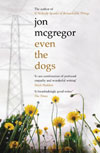 Even the Dogs starts with a breath-taking first chapter: a dead body is discovered in a flat and the hours after that discovery are told through the voice of ‘we’, seemingly disembodied voices who are and are not there. It’s a striking opening. Can you tell us a bit more about the story behind the beginning and about how you decided to use this narrative voice?
I'd heard a story about a man being found dead in his flat (in fact, it was someone my wife had been supporting through her work with an organisation which works with homeless people) and for some reason got stuck on thinking about what it might have been like to lie on the floor like that, waiting for someone to break down the door. I got quite a long way into thinking about the room, the flat, the history of the building, the weather outside, the sense of time passing, the crowd of friends outside waiting for the police to arrive; I realised that the crowd of friends couldn't actually have been there, and starting writing it as their - well, I wasn't sure what it was, maybe a dream or a vision or a speculation or even a film treatment, but writing it as 'we see this, we see that'. It was a strange and intriguing way of writing the scene, and it gave me a lot of leeway in terms of what I could describe and what stories I could tell within the single scene. It was fun to write, basically, even when I was describing maggots.
Did you feel the narrative voice helped or hindered you in writing the novel? I imagine it had its challenges, as well as its advantages.
Its challenges were its advantages. In a way, it freed me from a lot of the usual point-of-view constraints, in that I could show a lot of events and time periods more or less simultaneously; but at the same time I had to do a lot of technical thinking and clarifying around exactly how this voice could function - who is speaking? when? what can they see? I also had to find a way of conveying to the reader who was speaking, and how, without losing too much of the ambiguity I'd experienced while writing the early drafts. I'm not sure that makes any sense. But not-making-sense was a big part of what I wanted to do with this novel; I wanted that sense of chaos, and fragmentedness and anxiety and panic to come out through the form of the text as well as the content.
You seem to write about the people on the edges of society, people who are marginalised in one way or another. Is this a deliberate theme in your writing or something that you find yourself being drawn to without realising?
I don't know about deliberate. It's something I'm very comfortable with once I realise I've done it. I think I'm interested in the very notion of 'edges' and 'margins' and how much that says about the people who define where those edges are. The characters in Even The Dogs are at the very centre of their own lives, not the margins. In fact, for them its the rest of society which they choose to marginalise and which is notably absent from the book. I think I'm interested in acknowledging that everyone is at the centre of their own life. 
Do you approach the writing of a short story and the writing of a novel in very different ways? The economy and richness of your style works so well in both, but I imagine the planning and creation of each much vary. Can you tell us a little about how you sit down to each?
I don't know really. There's very little pattern. With a novel there is usually more planning around structure and shape and rhythm, although the plan often ends up being abandoned. With my novels there has also always been some kind of device to get me through the book; the structure of a-day-in-a-life, or the catalogue of artefacts, or the process of a dead body being handled by the state. Whereas with short stories there's more of a sense of plunging into the writing and seeing what happens - finding the voices of the characters, finding the meat of the story - and then going back later to work at the shape and the rhythm (which are just as important in a short story than in a novel, if not more so). It sounds obvious, but I usually find that a short story ends sooner than I was expecting.
Our favourite place to earwig for inspiration is on the top deck of buses. Where do you like to get inspiration?
I don't go around looking for inspiration, but I recognise it when I see it. Overheard mobile phone conversations are an absolute joy (and not just in terms of stories, but for the range of voices and vocabularies you can hear, the way people express or fail to express themselves, the way people continue to forget they can be heard) - I'm not sure how writers managed before mobiles. But also, yes, public transport, pubs and cafes, small shops where regulars get chatting to the shopkeeper. Also the things people drop in the street. Also people who forget to shut their curtains at dusk, lighting their lives for all to see. But also and most importantly the things that I sit at a desk and invent from scratch.

If you find yourself with a moment, a morning or an afternoon, to yourself – your deadlines have been met, your next book is not yet started – how do you like to spend that moment?
I'm sorry; I'm a parent, I don't understand the question...
Which short stories have most inspired you? What would be your advice to someone starting out as a short story writer?
'Fat' by Raymond Carver
'Last Day of Summer' by Ian McEwan
'Civilwarland in Bad Decline' by George Saunders
'Everything is Green' by David Foster Wallace
just about everything by Alice Munro
absolutely everything by Lydia Davis
My advice? Read more. Always read more. Read more deeply and widely and attentively. The great thing about short stories is the way you can study them, as a writer, to see how they're achieving what they achieve. Read and read and read, and after that the writing might come more a little more easily. And then edit.
And finally, can you recommend a great book/author to our readers?
At the moment, I'm very excited about the collected stories of Lydia Davis.
Jon McGregor is the author of the critically acclaimed If Nobody Speaks of Remarkable Things and So Many Ways to Begin. He is the winner of the Betty Trask Prize and the Somerset Maugham Award, and has been twice longlisted for the Man Booker Prize. He was born in Bermuda in 1976. He grew up in Norfolk and now lives in Nottingham.Even the Dogs, published by Bloomsbury in February 2010 and in paperback in February 2011, is his third novel.You can buy his story short 'If It Keeps on Raining' in an anthology with the other stories shortlisted for the BBC Short Story Award. (Author photograph copyright Dan Sinclair.)
INTERVIEW: Tania Hershman
 How and when did you first start writing short stories?
I started making stuff up when I was in Junior school, seven or eight I guess, that's when I got my first gold star for a story about breaking into a park at night. My mother saved it, she trains English teachers and I believe she shows them that story as an example... of something! (It's a bit embarassing to admit that. Hmm.) I didn't think of it as a career path til more than twenty years later, when I'd been working as a science journalist for a few years, but the little voice became more insistent, demanding I get back to fiction. So I did. That little voice still chatters on though, it's always demanding something!
Have short stories always been a passion?
Oh yes, absolutely, beginning with Roald Dahl when I was a kid. They really showed me the power and possibility in a piece only a few pages long. I wonder how many kids were inspired by his tales of the unexpected? Gruesome, yes, but that was part of the delight! That led me on to writers such as Ali Smith, who demonstrated other shapes for the short story, more intimate, quieter but nevertheless just as shatteringly poignant and affecting. I have always loved reading anything and everything, as long as it's a good story, no matter if it fills a whole book or just one page.
What do you think makes a great short story?
Ah well, so many things, and I'm finding new answers to this question all the time as I read more and more and more. I read 2,000 stories last year, judging several short story competitions, and what astounded me was just how many of them were great, and great in so many different ways! It's a personal thing, I am pulled into a story by a strong voice, the main character or the narrator, something that brings the character alive in my head as I read, so I can see, hear, smell, taste and almost touch the scenes. But I am pulled into other great stories in other ways – I love stories that give me a sense that anything might happen, whether this is magical realism, science fiction, speculative fiction, I don't go in for labels. Who wouldn't want to read on to find out where those kinds of stories go? And experimental fiction, writing that plays with language, that invents and messes around – deliberately, not because the writer can't distinguish 'your' from 'you're', something that will immediately throw me out of a story because I'm quite a stickler for that kind of thing.
That said, I prefer a 'messy' story that may not be perfect but takes risks to a carefully written and 'safe' story that never strays into dangerous territory – and 'danger' can mean something incredibly small, but something risky nonetheless. I'd rather be slightly confused for lack of information than given far too much information and know exactly what's going on, what's happened and what's going to happen. For me, a great story is one where the writer has left out enough for me, the reader, to insert myself into the story, for me to play an active role in reading it. That's what I love. Don't give me everything; trust my ability to read between the lines, fill in the gaps.
What are your top tips for approaching writing a short story?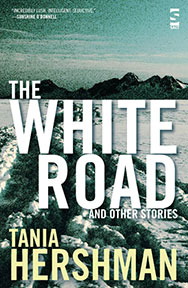
Don't worry at all about who might read it when you are getting down that 'first draft', just let the story tell you where it is going and be open to it going in different directions from the ones you may have imagined in your head. I believe that we all have a 'story sense' that is something subconscious that does a lot of the work for us, that helps shape what makes something a story rather than a random assortment of scenes and paragraphs. I don't believe there are any rules when it comes to the writing process itself, I have been exploring this on my blog recently. There are some 'conventions' which I had always imagined everyone else did and had been beating myself up about not doing – the main one was to revise with your 'analytical' head on, not in that creative 'zone' where the writing takes place – and by asking around and reading author interviews I discovered that this most certainly is not the case! Every writer does it differently, find what works for you, don't feel you must follow someone else's 'rules'.
It may seem odd that I haven't found my writing groove even several years after publishing a short story collection, but it's true. I recently interviewed an amazing 90-year-old author, Carol Emshwiller, whose Collected Stories, spanning over fifty years, has just been released. She said to me, Oh, don't read my early stories, I hadn't found my voice yet! And in her introduction to the book she talks about how she can see now the five different periods in her writing career. That helped me a lot, letting me accept that I might have another fifty years to try new things, experiment. That's a long time! My main tip is: write the kind of story you want to read. I write for myself, to amuse myself, make myself cry, explore ideas from within someone else's skin, their mind. If I don't write stories that I find compelling, why on earth should anyone else? Although I am still amazed that anyone else gets my stories, which in some ways, although not autobiographical, are sometimes very personal.
And how about approaching reading a short story?
With delight and anticipation! Every time I start reading a story, the first thing I do is see how long it is, to pace myself. Then I say to the story – wherever it is, whether in a collection, a lit mag, as an entry for a competition - 'Wow me!' I want a story to be great, I give it as much chance as possible, but really you can tell within about a paragraph if this is your kind of story. And because stories rarely appear in isolation, if it hasn't gripped me quite quickly, I will move on in search of another. But when I am gripped, the rest of the world fades, I read with utter concentration for those few minutes, completely absorbed. Then, generally, I have to stop, put down the book or the magazine, do something else while I recover. Because a fantastic story is something that you need to recover from after reading it. In the best way. And you never fully recover, there is always a tiny echo of it, lingering. That's why I love short stories.
Can you tell us a bit about how you write - are mornings best? Or late at night? Do you get out and about for inspiration? Or do you need to have complete silence and isolation?
There's no set time for me at all. A story generally starts in my head with something that catches on my imagination and, if it settles there, then a first line will come. And that first line will rattle around for a while until I know the time is right to write it down. Last year, for the first time, I carrried a notebook and pen around with me, writing down observations, ideas. I filled this small notebook and I am not sure whether stories came directly from that, but the act of observing honed my skills at noticing things other people probably don't as they are rushing from one place to another. I then bought a new notebook but what I am finding now is that I am not writing observations but actual stories that come to me when I am out, especially on trains, they are fertile places for stimulating my writing!
That said, I have always yearned for that room-of-my-own with a door I can shut, my own small writing space, which I hadn't had – until now. Because now I have my Writing Shed at the end of the garden! Oh joy! I've only had it for a few months, but it's just blissful. At first I didn't have Internet access down there, but I found that I was hardly going into the shed because I had other things to do that required being online. So I moved the router so the wifi reached the shed again and now I spend a lot of time in there, doing all sorts of things. It has a single bed in it, I have found from writing retreats that being horizontal inspires stories – I get some of my best ideas just as I am dropping off to sleep. Also, it has a shelf where I can put the laptop and work while standing. I don't like to sit too much.
I find cafes great places to work in, I like white noise. And I like food. A lot.
And when you're not writing and reading short stories, how do you like to relax?
I have to say that reading is my main relaxation activity – not just short stories but novels, poetry, non-fiction, newspapers. Every Saturday, the Jewish Sabbath, we switch off the TV, phone, computer, and just read and eat. I can easily read a whole book in a few hours. I swim. I have been known to hula-hoop in the privacy of our garden. I talk to cats. I love to sit in a dark room with strangers and watch a film. And food. Cake. And other things. But a lot of cake.
Finally, can you recommend some great short stories to our readers?
Oh, where to start? I read a lot of collections so I will recommend some of those: Roy Kesey's 'All Over' (which I am giving away on my blog in honour of Short Story Month!), Georges-Olivier Chateaureynaud's A Life on Paper, which is the first English translation of this French master's fabulous and fabulist stories, Stefanie Freele's wonderful collection of flash fiction, Feeding Strays (I particularly love the story 'She Doesn't Ask Where He Goes'), Janice Galloway's searing Collected Stories, minimalist and deeply unsettling. As for individual stories, there are so so many! 'Foster' by Clare Keegan knocked my socks off recently. 'The Wig Maker' by my great friend Vanessa Gebbie is an astonishing flash story. 'Underskirts' by Kirsty Logan is a fantastic story, as is the short story I chose as the winner of the Sean O'Faolain short story competition last year, 'Eddie', by Nikita Neilin. And 'Mum's the Word' by Valerie O'Riordan, which the panel of judges I was part of chose as last year's winner of the Bristol Short Story prize, only 350 words long and just phenomenal.
Thanks for having me!
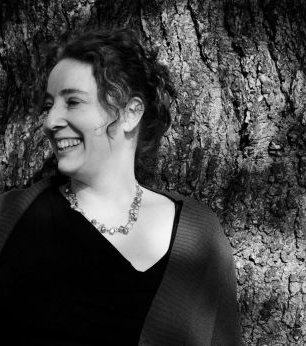
Tania Hershman's first collection of short stories, The White Road, was commended by the judges of the 2009 Orange Award for New Writers. She edits The Short Review, which is one of the best places to get great reviews of new short stories.
INTERVIEW: Vanessa Gebbie
You have published two collections of short stories. How do you go about beginning a collection? Does it start as an idea for the collection as a whole or do you bring stories together more organically?
I’m afraid I have to dash the belief (if anyone has it!) that my collections of short stories were planned. My writing life is a jumble – I am a chaotic person anyway, how I get anywhere on time is a mystery! But to answer the question for each book, because the process was very different: ‘Words from a Glass Bubble’ (Salt Modern Fiction, 2008) came about because I had a pile of decent stories and needed to do something with them other than having them scattered across the universe in anthologies or journals. I’d been lucky – had some competition successes at good places like Bridport, Fish, put those together and sent them to Salt, they liked them, asked for a few more, and bingo. Although the stories are all very different, readers tell me they can recognize my stamp, somehow, my writer’s voice. I don’t know how that works – I can’t see or hear any similarities at all! Thematically the stories hang together, although subject-wise the spread is wide.
The second collection ‘Storm Warning’ (Salt Modern Fiction 2010) had a different genesis. Salt wanted a second collection – and I wanted to do a book for my elderly father, who fought and was decorated in WWII. His war experiences affected him for the rest of his life – not in a dramatic way, but I was aware that he found war absolutely incomprehensible. Why did an ordinary, gentle person have to do that? What was it about? I’d been intrigued enough to explore the echoes that conflict leaves in those caught up in any way, in my fiction. Again, there were enough stories scattered about to make a coherent collection. Dad was very elderly, and suffering from dementia – but was aware of, and proud of ‘his’ book. He’s gone now, but that is a lovely thing to look back on.
I’ve also got a collection of very very short pieces, written deliberately to go together. ‘Ed’s Wife and Other Creatures’ might well be my first foray into self-publishing – if I can find an illustrator who can draw suitably mad beetles and other creepy-crawlies...we’ll see!
What made you want to write short stories?
Initially, it was the fact that they are ‘doable’ in a relatively short space of time. Or I thought they were. Then I found out, of course that the opposite is often true. So now, I’m not so sure. It was also the challenge of writing something difficult. They are not easy – but that’s part of the skill, to make them seem effortless, when you’ve really sweated buckets and sometimes been reduced to tears over the difficulties. But when they suddenly come right – there’s nothing quite like it!
Where do you find your inspiration?
When tragedy and comedy work together. That’s life...Where there is loneliness, sadness, mis-communication. When unexpected people reveal unexpected strengths in unexpected ways.
You grew up in Wales. Has the lyricism of the Welsh language, and the importance of its authors influenced you in your writing?
I didn’t grow up solely in Wales, but I stayed with my adoptive paternal grandmother in Merthyr Tydfil as often as I could, and used to make a helluva fuss when I had to leave. I felt absolutely relaxed and happy with her. There were no expectations, no stresses, just a feeling of being loved unconditionally, and belonging absolutely. Maybe that feeling’s the best place to return to, when we’re writing? I can still hear her, ‘Time for bed now. You clean your teeth like a good girl, and after Coronation Street I’ll bring you up some cigarettes...” (Sweets, honest! In little packets just like my auntie's Embassy tipped.) I spent my teen years at boarding school in north Wales - fabulous place. Mad as hell. Dreadful teaching and wonderful teaching side by side. I was almost expelled for "having the devil on my shoulder". It closed soon after I left - I don't think the two events were linked though.
I am not going to pretend to be well-read – but I’ve always loved Dylan Thomas’s ‘Under Milk Wood’, the humour of it, the way he creates a character in a few lines of speech, and a whole living community in the interplay of a few characters. Did he influence me? Yes, yes and yes again – he was a great teacher! But I’d already met some of his characters in the Merthyr streets – they, or characters like them, were my relatives, and Nan’s neighbours. I love the work of David Jones too, in ‘In Parenthesis’, which must have been read by Dylan Thomas – the dialogue is so wonderful, the language – although the subject-matter couldn’t be more different. We learn from everyone we read, don’t we? To do, or not to do. What works for us, what doesn’t. What inspires.
Cadences of speech? If a story is set in Wales, then yes, the voices of my family permeate the writing. Or rather they overwhelm it – so I have to ask them to stand back now and again!
How do you relax when not reading/writing short stories?
Thinking about the next one...or worrying that I can’t unearth the next...
Recommend a short story/short story collection to us.
I’m reading Oscar Wilde’s ‘The Happy Prince’ again – I love fairy-stories, although they are sometimes more real than realism very often, don’t you find? And I’ve got ‘Little Herr Friedmann and Other Stories’ by Thomas Mann by the bed. I would also like to recommend that readers keep an eye out for A J Ashworth’s ‘Somewhere Else or Even Here’, out later this year from Salt Modern Fiction. Hands up – I’ve just read and endorsed this lovely collection, which was one of the winners of the 2011 Scott Prize.
You've just written your first novel. Was the process of writing it very different from the short stories?
Not really – I approached it as a series of twelve stories about twelve central characters, then split each story into three, undid much of each story arc, and wove them into a novel-length piece of work, a novel structure. Sounds simple, but it took me 6 years... Single shorts are much easier (!). The Coward’s Tale is out from Bloomsbury UK and USA this winter.
And finally, what are you working on now?
I always multi-task. The brain is working on the next novel. My fingers are writing poetry. And I’m off on an Arvon play-writing course in ten days' time. I write a lot of flash fiction too...
The next non-writing project is a weekend retreat for women writers coming up in September, at the glorious Tilton House, in deepest East Sussex. I’m running this on behalf of New Writing South, and need to plan the six writing workshops which will form the creative core of the retreat. And also, must plan which pubs we are going to walk to, which stories we are going to tell round the fire pit, in the dark... I can’t wait for this – they say you should run events you want to go on yourself – telling me. I need someone to run one for me, please!
Vanessa Gebbie is the author of two collections of stories and contributing editor of a creative writing text book. She has won numerous awards - including prizes at Bridport, Fish and the Willesden Herald - for her short fiction. Many of her prize-winning stories have been gathered together in her debut collection, Words from a Glass Bubble (Salt Publishing, March 2008). An extract from The Coward's Tale won the Daily Telegraph 'Novel in a Year' Competition. Vanessa is Welsh and lives in Sussex.
~~~~~~~~~~~~~~~~~~~~~~~~~~~~~~~~~~~
Shortfire Press & Marcel Theroux: a short masterclass in short story writing

Marcel Theroux is the author of four novels (Far North, A Blow to the Heart, A Stranger in the Earth, and The Paperchace) and the winner of the 2002 Somerset Maugham Award. He is also a tutor on the Faber Academy's short story course and kindly gave Shortfire Press some tips for the budding short story writer. You can download his story, 'The Ordeal of Toby Trubshaw', from Shortfire Press for free.

Marcel is teaching a weekend course on the short story with the Faber Academy in June (now sold out, unfortunately), and a longer, three-month course starting in October. For more information about the short story courses, and the many other course offered by the Faber Academy, visit their website. To find out more about Marcel, visit his website.
Let’s begin at the beginning – how do you start writing a short story? Is it important to have a strong sense of the plot and arc of the story to begin with? Can you give us a little about how the idea for ‘The Ordeal of Toby Trubshaw’ came about?
At the risk of demeaning my own credentials at the outset, I have to say I don’t consider myself to be a master of the short story. There are writers — Helen Simpson, Lorrie Moore, William Trevor, Alice Munro — who write, solely or mainly, short stories. I consider myself a fan and a student of the genre. Having said that, I do think a lot of bunk is talked about short stories. I mean, I enjoy all these writers and I love Chekhov, but I feel there’s a way that the quote unquote literary short story has unfairly hogged the limelight. A short story is a great way to explore mood, a pregnant silence, a seemingly mundane scenario that’s somehow charged with significance. But I don’t see why that kind of short story is the only kind or necessarily the most valid. A short story is just short. Beyond that I think anything is possible. I also love genre pieces, horror, speculative fiction Saki, Poe, Lovecraft, John Collier, Wodehouse, the unclassifiable flights of Borges, etc. Okay, end of homily.
There are broadly two ways to approach any piece of writing, in my opinion. One is where you have an idea of where the whole thing is heading: 'worldly roué meets young woman in Yalta; falls in love in spite of himself; faces an uncertain future,' — in the case of Lady with the Lapdog. The other is where you have a phrase, an image, maybe a single line that fascinates you and provokes you into elaborating it. Stephen King in On Writing talks about his writing process resembling archaeology: he’s scratching away earth that surrounds a skeleton which already exists and which could turn out to be virtually anything. No one could say that his work is short of storytelling, but he plots very little. Flannery O’Connor said much the same thing about her method: she just had a sense of an opening and then pursued it — like Theseus following the thread out of the labyrinth. I think this seems scary, but it can lead to an outcome that feels very natural, unforced and satisfying. The painter Francis Bacon said something that I’m fond of quoting to my students: 'the hinges of form come about by chance seem to be more organic and to work more inevitably.' I really encourage people to follow this advice, and largely follow it myself.
Having said all this, some times an idea will appear whole, often in the form of a 'what if?' For example, there’s a Martin Amis short story called 'Career Move' about a world in which poets are well-paid and feted and blockbuster screenplays are treated as esoteric works of art. That’s a very funny conceit — and it obviously preceded the writing of the actual story.
Trubshaw was one of these. I know various people who have been kidnapped, and I know something about being a parent of tiny children. It struck me that, for a certain type of man, the privations of kidnap might be superior to being stuck at home with squalling children: because, after all, no one wants to hear your stories about that. And I thought that if I could pull off the idea that he actually preferred to be with his former captors than with his family — well, that seemed funny to me, and to possess a weird and unlikely truth.
I should say that it’s also possible to arrive at a less outre short story by the same route. Updike’s lovely 'Brother Grasshopper', for example; and the more I think of it, many of William Trevor’s short stories feel as though he has seen them whole from the outset. Of course, I could be wrong about this.
OK, so you have a cracking idea. What do you think are the most important considerations when actually tackling writing a short story?
This is a tough one. I mean, it’s going to vary from story to story. With 'Trubshaw', because the premise was, let’s face it, extremely unlikely, I needed to persuade the reader somehow that we were operating in a world where it was possible.
I think that it’s always about execution. If I told you that I was going to write a story about a man who wakes up and finds he has turned into a beetle, there’s a good chance you’d think it was a stupid idea. But Kafka has the power to make that not only a good story, but one that’s actually shaped the way we think about short stories.
So part of the answer is something about conviction, something about summoning the authority to say 'One morning, when Gregor Samsa awoke…' and have the reader believe that a man has become a cockroach.
The other thing, and I say this tentatively, because I think that the short story has a tendency to prove people who pronounce on it foolish, is that the short story is usually about one thing. “The novel tells us everything, V.S. Pritchett said, 'whereas the short story tells us only one thing and that, intensely.'
I think this is the great relief of the short story. I’ve had students working on novels who felt obliged to pad them out with irrelevant stuff to achieve what felt to them like a novelistic length.
And then, when you get to the end – how would you recommend editing? Did ‘Toby Trubshaw ‘change dramatically in its revised drafts? Can you tell us a little about that process?
Yes, I did edit a lot, and chucked stuff out. And there are stories I have written that haven’t seen the light of day because I never felt like I’d quite nailed them. I can’t explain editing in a nutshell. If you want to see what a big and fraught subject it can be, it’s worth looking at the way Raymond Carver’s short stories got perfected/massacred by his editor (depending on your taste) Gordon Lish. The original versions of the stories in What We Talk About When We Talk About Love are available in Beginners. What I would say, though, is that beginning writers almost always underedit. I was very shocked when I saw my father-in-law pruning my shrubs. He just seemed to brutlize them and leave virtually nothing there. But he grew up on a farm and knows what he is doing. Short stories are the same: they generally thrive on very severe attention. But it’s an art, not a science, so some writers — maybe Lovecraft, for instance? — need a certain ornateness to achieve their effect.
Often short stories are as much about an understood hinterland, a series of shadows which lie under the surface of each story. The best stories seem to imply much more than they explicitly say. Is that tricky as a writer to achieve? And how do you go about approaching it?
All the best art has a kind of ineffable aura around it. I think that’s because the artist has tapped into something deep in themselves. I don’t you think you get there through explicit direction. I think we’ve all felt that moment in a movie when the story suddenly goes clunk because the hero picks up a little puppy and you feel as though a scriptwriter is grabbing your lapel and telling you 'see, this character’s likeable!'
There are plenty of tips flying around about short story writing techniques. Do you have any rules you think it’s important to know? Even if just to break them?
You can think of any rule you like and it will have been broken not just in a short story, but in a short story by Chekhov. This point is well made in Francine Prose’s book Reading Like a Writer.
We’ve talked about rules and techniques, but is writing a short story as hard as people make it out to be?
At the risk of sounding glib, it’s easy to write a short story if you can keep your bum in the chair long enough. It’s hard to write a good one.
Which short stories would you recommend on a must-read list for any short story writer?
The short story isn’t a tree, it’s a forest, maybe a jungle, and that isn’t sufficiently recognized. I don’t want to recommend, say, 'The Dead' by James Joyce and have some seventeen-year-old kid turned off short fiction for life because it doesn’t speak to them. You write what you love to read, whether that’s science fiction, in all its guises, horror, or the so-called literary short story. This is going to seem harsh, but if you don’t care enough about short stories to have your own list of favourites already, why are you writing them?
~~~~~~~~~~~~~~~~~~~~~~~~~~~~~~~~~~~~~~~~~~~
STORIES BY AUTHOR
- RICHARD BEARD
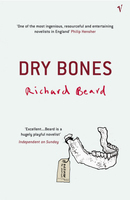
RICHARD BEARD is the author of four critically acclaimed novels: X20, Damascus, The Cartoonist and Dry Bones, and three works of non-fiction: Muddied Oafs, How To Beat The Australians and Becoming Drusilla. He is Director of the National Academy of Writing in Birmingham. His latest novel, Lazarus is Dead, will be published in August.
Praise for Richard Beard
'One of the most ingenious, resourceful and entertaining novelists in England'
PHILIP HENSHER
Books by Richard Beard
- KAT BROWN
KAT BROWN was born in London in 1982 and grew up in Hampshire before escaping back to the city with scholarships at the BBC and Empire. She is a journalist at The Times and writes for The Sunday Times, The Spectator and GamesMaster, as well as appearing on BBC Radio 5 Live, BBC1 and E4. Kat has contributed to books for Empire, Le Cool London and Domestic Sluttery, and won the December 2011 edition of Literary Death Match with her story 'A Marvellous Party'. She is working on her first novel when not procrastinating wildly on Twitter.
Buy 'A Marvellous Party' by clicking on the logo below.
Short Stories by Kat Brown:

A MARVELLOUS PARTY
- GAVIN JAMES BOWER
GAVIN JAMES BOWER was born and raised in Lancashire and now lives in London. His debut novel, Dazed & Aroused, was described by 3:AM magazine as ‘Less Than Zero for the Off-Beat Generation’. His journalism has appeared in FLUX and the Sunday Telegraph. Made in Britain, his second novel, is published in Septembe
Praise for Gavin James Bower
‘Dazed & Aroused is an insightful debut from a novelist who already shows an ability to cut through the hype and reveal the dark heart of everyday life.'
INDEPENDENT

- MORVEN CRUMLISH
MORVEN CRUMLISH is a novelist and short story writer. Many of her stories have been produced by Sweet Talk productions and broadcast on BBC Radio 4, most recently ‘Harold Lloyd is Not the Man of My Dreams’ (July 2011). ‘The Big the Beautiful Nanda Gray’ was a runner up in the Scotsman/Orange Short Story Competition 2006 and was published by Polygon in the collection WORK. Her first published story was ‘You See Patterns When you Close Your Eyes’ which appeared in Shorts 4: the Macallan/Scotland on Sunday Short Story Competition collection from 2001. She is a contributor to the Guardian. In 2004 she was awarded a New Writers Bursary from the Scottish Arts Council, and she was a finalist in the 1998 VogueTalent Contest for young writers. She lives in Edinburgh.
Buy 'Harold Lloyd is Not the Man of my Dreams
- LAURA DOCKRILL
LAURA DOCKRILL is a poet and illustrator from South London. A graduate of The Brit School of Performing Arts, twenty-four-year-old Laura was named one of the top ten literary stars of 2008 according to The Times and was voted Elle’s top face to watch out for in 2009.
Her sassy and unique way with words has captivated audiences at gigs and festivals everywhere, from Glastonbury to the London Word Festival. She has been at the forefront of the performance poetry movement, having appeared on programmes such as Woman's Hour and Newsnight Review. She continued her whistle-stop tour of the UK festival scene in 2010, kicking off by headlining the poetry tent at Latitude and continuing with Camp Bestival, The Big Chill and Underbelly on the Southbank, sponsored by E4.
Praise for Laura Dockrill
‘Everyone’s falling for poet Laura Dockrill’s modern musings’
VOGUE
‘Laura Dockrill is a singular talent in the brave new world of poetry’
PHILL JUPITUS
‘Laura has a wonderfully wild and exciting imagination … she defies boundaries’
KATE NASH
Photo © Sonny Malhotra
Books by Laura Dockrill


- JEAN HANNAH EDELSTEIN
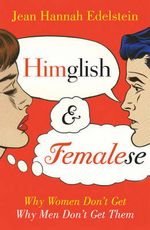
JEAN HANNAH EDELSTEIN was born in upstate New York and now lives and works as a writer in London. Her first book, Himglish and Femalese: Why Women Don't Get Why Men Don't Get Them, was published by Preface in 2009.
Books by Jean Hannah Edelstein
- Stuart Evers
- Kitty Fitzgerald
- Jonathan Gibbs
- Virginia Gilbert
- Niven Govinden
- Salena Godden
- Sarah Hilary
- Ed Hogan
- Jess Hyslop
- Lucy Inglis
- Elizabeth Jenner
- Vikram Kapur
- Thabi di Moeketsi
- Nadifa Mohamed
- Tiffany Murray
- John Osborne
- Nikesh Shukla
- Marcel Theroux
- Jo Tiddy
- Urban Waite
- David Whelan
- Lucie Wilk